Post-Workout Recovery: How AI Optimises Your Gains
Beyond the Burn: How AI is Revolutionising Your Post-Workout Recovery
You’ve smashed your workout, felt the burn, and the endorphins are kicking in. Awesome! But what happens *after* you leave the gym? For many, it’s a scramble of generic advice or hoping for the best. Here in New Zealand, we’re a nation that loves to stay active, pushing ourselves year-round. Yet, the crucial element of post-workout recovery is often the most overlooked, and it’s costing us real progress.
As trainers, we see it all the time. Members come in fired up, ready to tackle new challenges, especially as the intensity picks up after summer. They track their reps, their weights, and their cardio, but the data stops once they towel off. This is where the future of fitness is incredibly exciting, and it’s powered by AI.
Why Recovery Is Your Secret Weapon
Think of your muscles like a construction site. Your workout is the demolition and rebuilding phase. Recovery is when the new infrastructure is solidified, stronger and more resilient than before. Without adequate recovery, you’re just setting yourself up for burnout, injury, and plateaus.
It’s not just about feeling less sore; it’s about optimising your entire training programme. Proper recovery allows your body to adapt to the stress of exercise, leading to improved performance, reduced fatigue, and better long-term results. It’s the silent partner in all your hard work.

Transform Your Fitness Practice
Join thousands of Kiwis who’ve found their fitness companion.
No downloads, no hassle — just results.
From Guesswork to Data-Driven Gains
For years, recovery advice has been a one-size-fits-all approach: stretch, hydrate, sleep. While these are fundamental, they don’t account for the nuances of individual physiology, training load, or lifestyle factors. This is where AI fitness truly shines.
AI algorithms can delve deep into your personal data – everything from your workout intensity and duration to your sleep patterns, heart rate variability, and even nutrition. By analysing this complex web of information, AI can provide incredibly specific and personalised recovery recommendations.
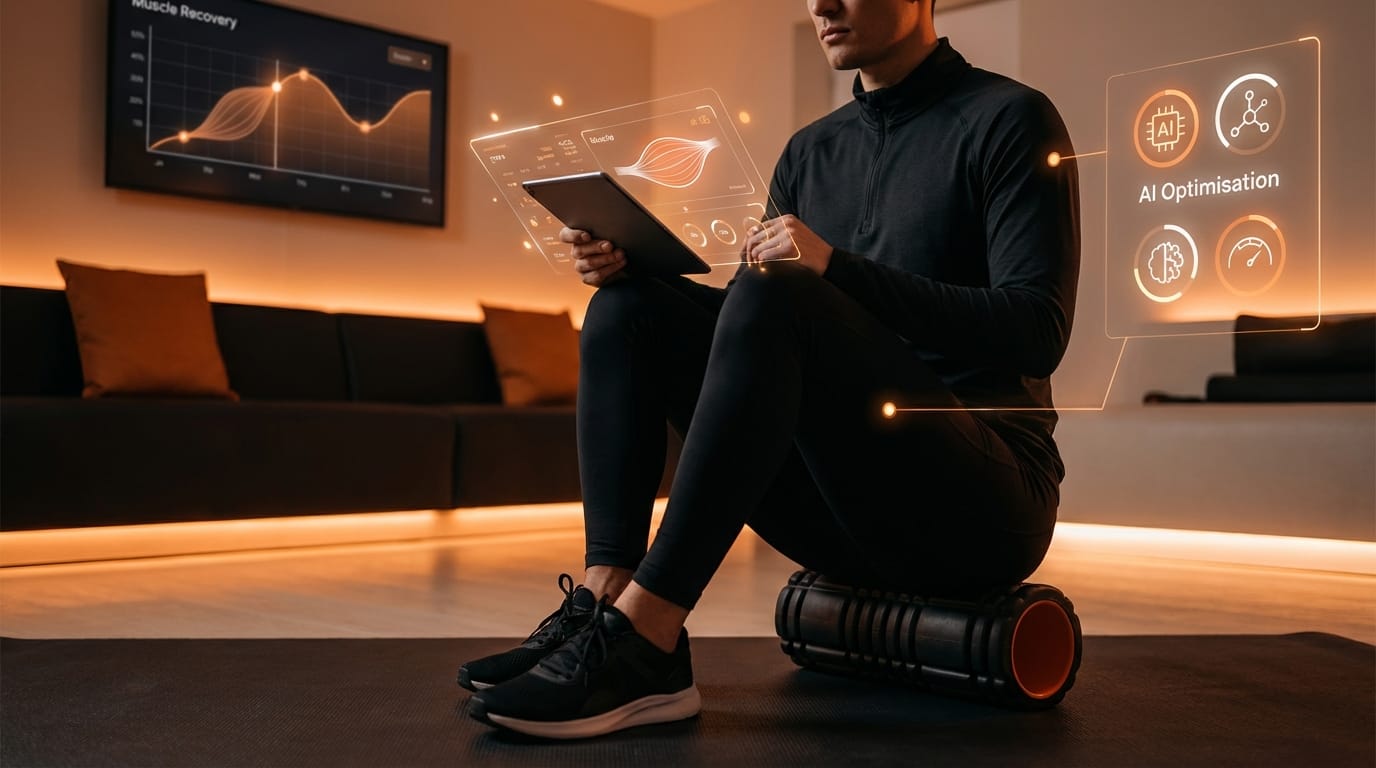
Imagine receiving a notification suggesting a specific type of foam rolling for a tight hip flexor after a heavy squat session, or a precise macronutrient breakdown for optimal muscle repair based on your energy expenditure. This level of detail moves us beyond generic advice and directly into optimising your gains.
Real-World Impact: More Than Just a Feeling
The evidence for AI’s impact on performance and well-being is compelling. Research shows that AI-driven recovery protocols are not just theoretical; they’re delivering tangible results. For instance, the NFL saw a significant 17% reduction in concussions in 2024 by implementing AI-driven insights. That’s a testament to how effectively AI can identify and mitigate risks.
On a personal training level, the improvements are equally impressive. Studies indicate that personal trainers leveraging AI technology are seeing workout adherence improve by a staggering 71%. When clients see these kinds of results and feel their progress is being actively managed and enhanced, engagement skyrockets.
My Own “Aha!” Moment
I remember a client, let’s call him Dave, who was training for his first half-marathon. He was hitting his mileage, but his recovery was a mess. He’d often skip stretching, ate whatever was convenient, and his sleep was erratic. He was constantly complaining of fatigue and niggling injuries, which was impacting his motivation. We tried everything – more sleep advice, different nutrition plans – but it felt like we were just tweaking around the edges.
When we started incorporating AI-driven insights, the game changed. The app analysed his training load, his sleep data from his wearable, and even his reported energy levels. It identified that his post-run protein intake was consistently too low and his sleep quality dropped significantly on days he trained late. The recommendations were specific: a protein shake within 30 minutes of finishing, and a structured wind-down routine for evenings with late runs. Within weeks, Dave wasn’t just feeling better; his pace improved, and those nagging pains disappeared. He was finally optimising his gains, not just accumulating training miles.
The Future Is Now: Smarter Recovery for Everyone
The integration of AI into fitness is rapidly becoming the norm, and it’s not just for elite athletes. Wearable technology, a key fitness trend for 2025, provides the raw data that AI then translates into actionable insights. This technology is democratising advanced recovery strategies, making them accessible to every gym-goer.
For gym owners and fitness institutions, this is an opportunity to provide unparalleled value to your members. By offering tools that go beyond basic tracking, you empower your community to achieve their goals faster, stay motivated, and ultimately, become more loyal to your centre.
Practical Takeaways for Your Members (and Your Business):
- Prioritise personalised recovery: Move beyond generic advice and embrace data-driven recommendations.
- Listen to your body (and your data): Pay attention to how you feel and the insights your wearables or apps provide.
- Consistency is key: Implement recovery strategies as diligently as you do your training sessions.
- Invest in technology: For gyms, consider solutions that offer AI-powered engagement and member progress tracking.